History
Memorial
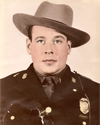
Patrolman Edward Frank Meagher
Henderson Police Department, Nevada
End of Watch Tuesday, March 13, 1956
Patrolman Edward Meagher was killed in an automobile crash while driving a new city fire truck to a report of a fire.
The fire truck struck another vehicle while going through an intersection. During the time period city police officers were often used to drive the fire trucks to the scenes of fires.
Patrolman Meagher had served with the Henderson Police Department for two years. He was survived by his wife and child.
Henderson Police Department History
1950's
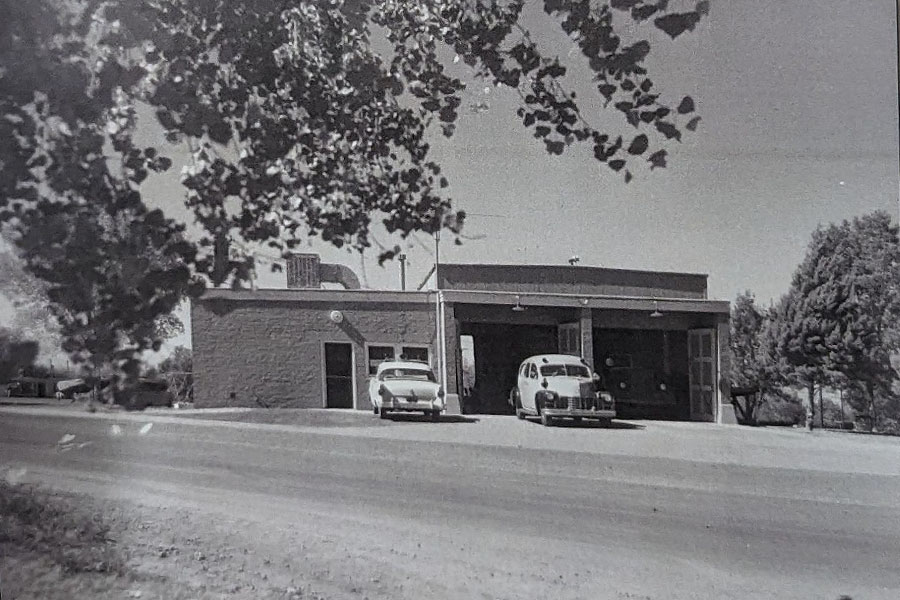
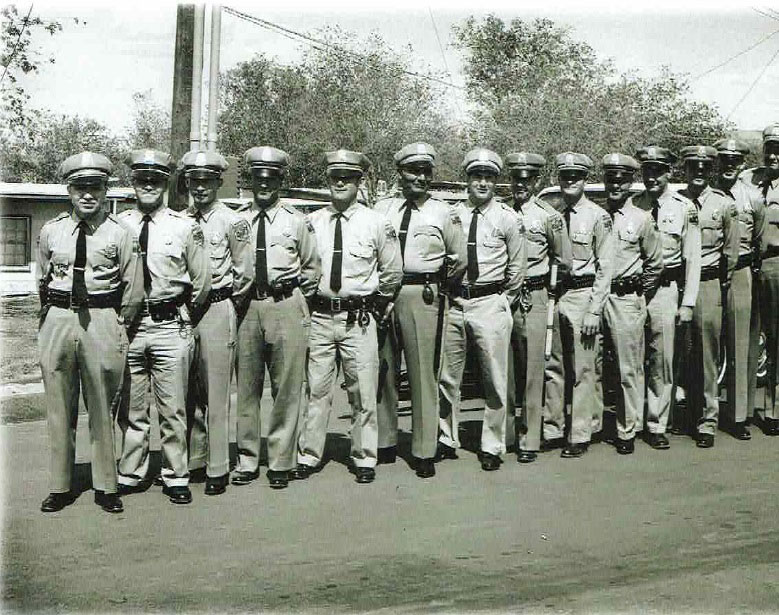
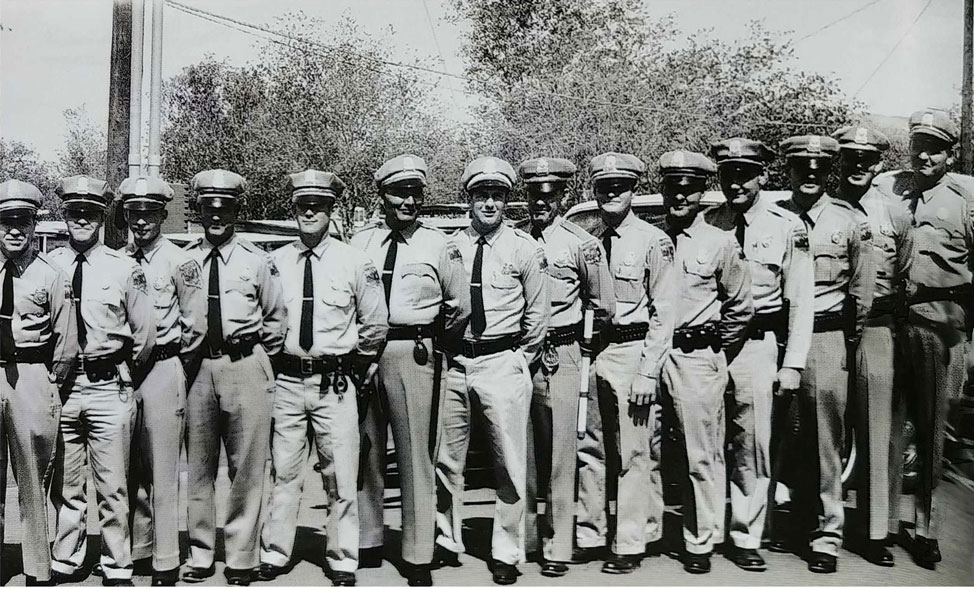
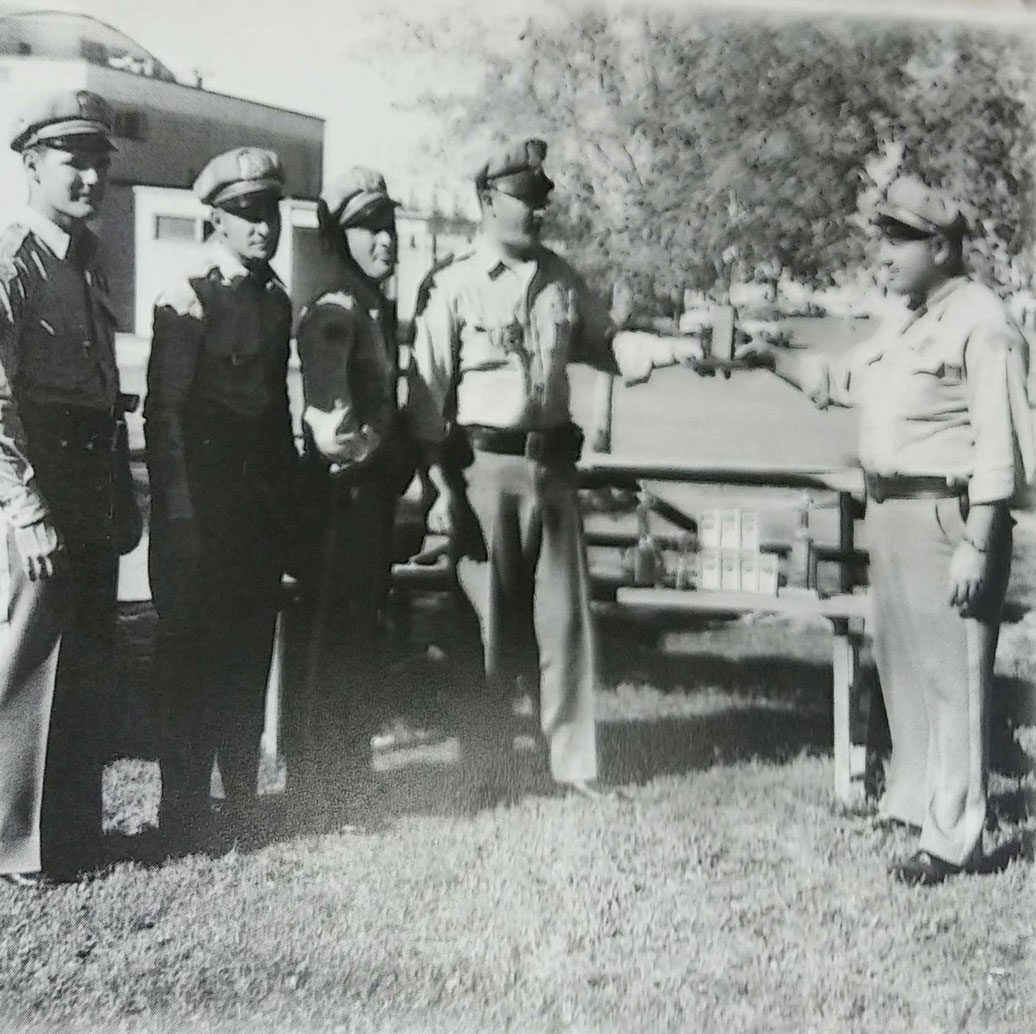
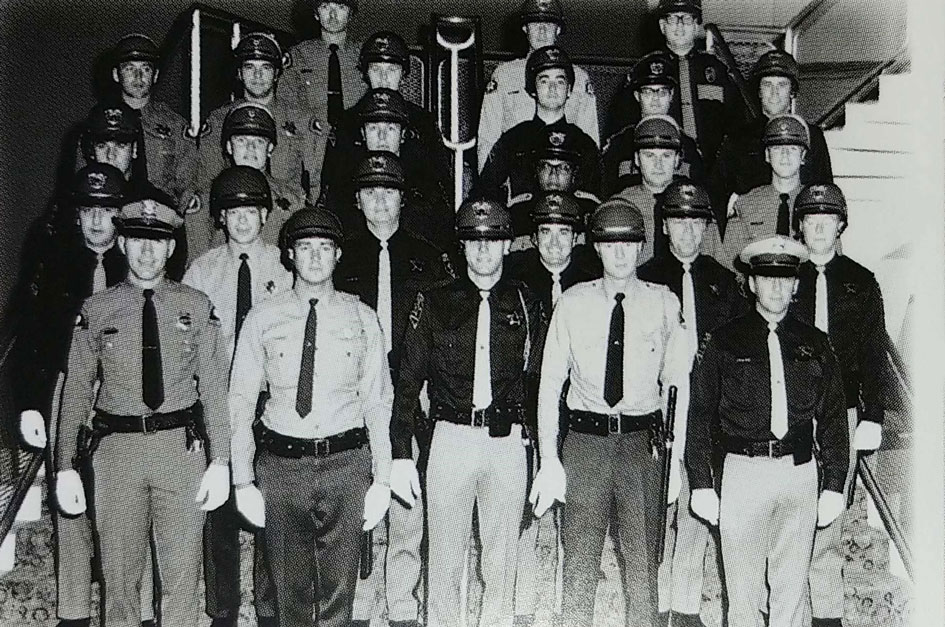
Prior to 1953, the citizens of Henderson relied on the Clark County Sheriff’s Office to enforce the laws, protect the citizenry, and protect the industrial plants on the outskirts of the town. Henderson was incorporated on April 15, 1953. One of the first duties of the new City Council was to establish Henderson’s first official police force by naming Paul Dickover as Fire and Police Commissioner, replacing the sheriff in the role of local law enforcement.
The appointment was on a temporary basis for one year with an annual salary of $4,000. On July 8, 1953, the City hired its first police chief, Weldon W. Parker. The uniform of the day was tan, just like the Clark County Sheriff’s Office uniforms. The only thing that set the Henderson Police Department officers apart from the Sheriff’s Office was a small beige patch with “Henderson Police Nevada” in yellow letters. On August 20, 1953, George Crisler was sworn in as Chief of Police with a staff of five patrolmen and one patrol car which was borrowed from Clark County Sheriff Glen Jones.
1950's
Prior to 1953, the citizens of Henderson relied on the Clark County Sheriff's Office to enforce the laws, protect the citizenry, and protect the industrial plants on the outskirts of the town. Henderson was incorporated on April 15, 1953. One of the first duties of the new City Council was to establish Henderson's first official police force by naming Paul Dickover as Fire and Police Commissioner, replacing the sheriff in the role of local law enforcement.
The appointment was on a temporary basis for one year with an annual salary of $4,000. On July 8, 1953, the City hired its first police chief, Weldon W. Parker. The uniform of the day was tan, just like the Clark County Sheriff's Office uniforms. The only thing that set the Henderson Police Department officers apart from the Sheriff's Office was a small beige patch with "Henderson Police Nevada" in yellow letters. On August 20, 1953, George Crisler was sworn in as Chief of Police with a staff of five patrolmen and one patrol car which was borrowed from Clark County Sheriff Glen Jones. In October 1953, Chief Crisler made it mandatory for all police officers to attend FBI training offered in Boulder City. The training consisted of firearms training as well as classroom training covering investigations and evidence handling. The entire department consisted of seven full time officers, three auxiliary officers, and the Chief.
Two Ford Mainline cars were added to the Police Department fleet, one to be used by the Chief in his investigations and business; the other would be utilized as a patrol car. In November of 1953, a three-way radio system was installed This made it possible for the station to contact the officers and the officers to contact each other as well as the station.
Prior to this, all communication had gone through the Sheriff's Department radio system. Crime was almost non-existent in Henderson. In 1953, Henderson's police force had nine-tenths of a policeman tric)! every 1,000 citizens. By comparison, the United States average was 1.8 officers per 1,000 citizens. Henderson had no murders during the period, the robbery rate was 8.3 compared to the State of Nevada at 87.0, and Henderson's burglary and breaking and entering incidents were 175, compared to 711.5 for the entire state of Nevada.
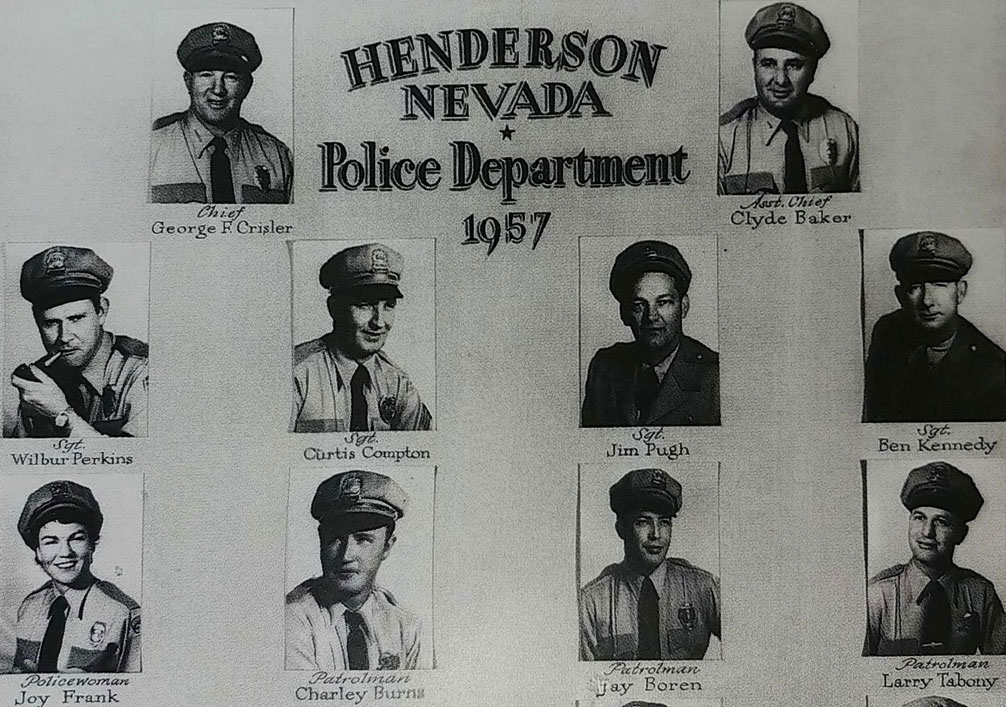
On January 10th 1955, the Henderson Police Department hired their first policewoman, Officer Joy Frank. She won several medals in shooting matches and would frequently outshoot male members of the Department. A tragedy rocked the police and fire departments on March 13, 1956 when Officer Edgar Meagher was killed instantly while responding to an alarm in Victory Village. Officer Meagher was driving the Fire Department's brand new fire truck, when he broadsided an Arden Dairy Milk Truck at the Boulder Highway & Vegas Wash (Lake Mead) intersection. became the untimely death came just two hours after he had been named the City's Acting Assistant Fire Chief; and he ecame the first Henderson police officer to be killed in the line of duty. In June 1956, Chief Crisler announced the near completion of the first shooting range for the Henderson Police Department. This range was constructed by City of Henderson police officers on their off-duty time.
In 1957, the department had a complement of 14 officers, 1 policewoman-secretary, and 15 reserve officers. The police department purchased a new 1958 Ford Interceptor which was equipped with the latest in radio and emergenty equipment. The force now had three patrol units, one plain clothes vehicle, and a motorcycle was added to cut down on gasoline and maintenance costs. The department also purchased a 37-mm tear gas gun kit which included various forms of tear gas projectiles and hand grenades which were excellent means of quelling civil disorders or riots.
On April 10, 1958, the department acquired teletype service for the first time which was linked with the Clark County Sheriff’s Office system
March 1959, new cap badges were made available. They were encircled by an eagle with the Nevada state seal in the middle and had been approved by the local policemen's Benevolent Association. The badges cost $9.20 retail price and were paid for by the members of the force.
In 1961, the police department was running on a shoestring budget but the City Council did vote to increase the budget from $127,082 to $137,782. Chief Crider requested three additional employees intending to hire three women as dispatchers and then releasing sergeants from their responsibilities at the desk in order to put them back on the streets. The City Council instead opted to hire three men who could be cross trained.
Councilman Bob Kesterson suggested that when it came time to replace the patrol cars, station wagons should be added to the fleet and equipped with firefighting gear. He stated that `with three cars cruising around the city all the time, one of them would be closer to the fire than the fire department.” The council was in unanimous agreement with his idea and included $200 in the protective equipment fund.
1960's
In 1961, the police department was running on a shoestring budget but the City Council did vote to increase the budget from $127,082 to $137,782. Chief Crider requested three additional employees intending to hire three women as dispatchers and then releasing sergeants from their responsibilities at the desk in order to put them back on the streets. The City Council instead opted to hire three men who could be cross trained.
Councilman Bob Kesterson suggested that when it came time to replace the patrol cars, station wagons should be added to the fleet and equipped with firefighting gear. He stated that `with three cars cruising around the city all the time, one of them would be closer to the fire than the fire department." The council was in unanimous agreement with his idea and included $200 in the protective equipment fund.
Under the direction of Chief Crisler, a review board was established in 1960 which proved valuable in selecting top men and women for the Reserve Police Force. Prior to 1961, reservists were required to purchase their own uniforms and side arms.
A new emergency radio system was put into operation in February 1962. Half of the cost was provided by Civil Defense and the other half by the City of Henderson. The new radio operated on a citizen's band, and through it the local police could contact 20 local residents who had volunteered to give aid in case of an emergency. Two or three of these volunteers were radio technicians who had volunteered to work on the radios when problems occurred.
In 1962 all City employees received a $25.00 per month raise, a move which put HPD more in line with other valley departments. The below chart was placed in the Henderson Home News depicting how HPF compared with others in the valley. This scale included the $25.00 raise for Henderson.
LAS VEGAS
Patrolman $447-$547
Motor Officer $447-$547
Police Sergeant $537-$650
NORTH LAS VEGAS
Patrolman $414-$447
Motor Officer $438-$521
Police Sergeant $456-$547
HENDERSON
Patrolman $454-$533
Motor Officer $466-$548
Police Sergeant $502-$583
Reserve Officers filled in for regular officers and were required to work 300 hours in a six month period; additionally, they were asked to be available 24 hours a day. During the previous year, Reserve Officers worked a total of 4,879 hours at a cost of $.25 per hour.
In 1963 the police department purchased its first radar unit, "Radar-Timer". The Radar-Timer contained a recording device and timing machinery, and was capable of picking traffic speeds for a distance of 600 to 800 feet from two to three blocks, with cars going in both directions. It also stopped at the speed at which the offender was traveling so there was no question about the speed registered.
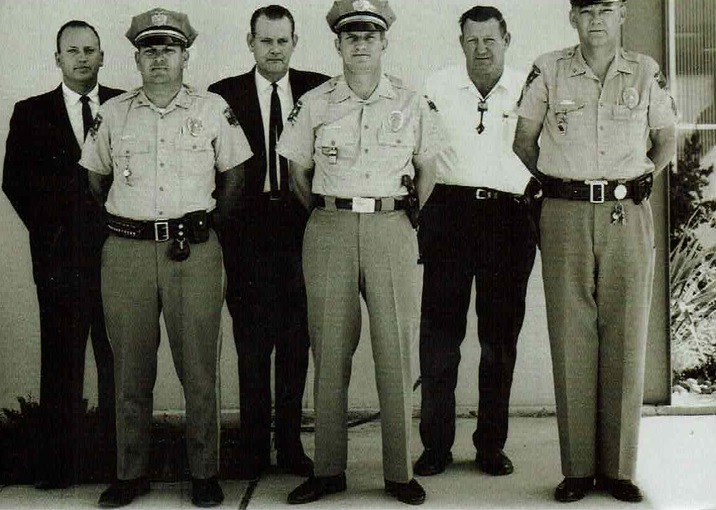
At the beginning of 1964, the police department consisted of a staff of 20: Chief George Crisler, Detective Sergeant Wilbur H. Perkins, Shift Sergeants Ben Kennedy, Floyd Osborn, James H. Pugh. Martin Sherman; Policewoman and Secretary Betty Wagner; Detective Donald Jimmy Jensen; motorcycle Patrolmen George Liggett. Loren Lomprey, Patrick Maloney, William Miller, Jerald A. Nelson Loren Ogle, Bobby Harold Taylor, and Walter L. Zawrotny; and Dispatchers Demarise Felix, Lucile McConachie and Dorothy North.
Six new regular officers were added to the department; these officers were added to the police department because of the new five-day work week as well as the 4% pay raise for all employees. The six men hit the street after one week of training by Sergeant Floyd Osborn. The training sessions included studies of larceny, burglary, interview and interrogation, repo writing, public relations, stake-out, laws of arrest, search and seizure, weapons and defense, city ordinances, and Physical training. This was accomplished under the supervision of Acting Chief Captain John Farnsworth.
By 1964, the population in Henderson had reached 17,497 — the town was growing by leaps and bounds.
The Henderson Police Department again needed to hire more officers. Requirements for applicants were: between condition, v. and 35, a high school graduate or equivalent, minimum 5'9" inches tall, 160 pounds, in good physical starting pay vision correctable to 20/20, no arrest record, and six months residence in the State of Nevada. The Worked five dap police officers was $532 per month; with top pay over a period of five years $809 per month. Officers worked five days per week on rotating shifts, with five days of vacation the first year; two weeks of vacation per year the next four years and three weeks' vacation each year after the fifth year. A straight sick leave of 9.6 days per year was allowed. A monthly clothing allowance of $5 was allotted to each officer, but each was required to purchase their Uniform when starting work with the Department. The City of Henderson was under Civil Service Rules effective December 8, 1965.
One of the best statistics that Henderson celebrated was the distinction of having no traffic fatalities for the year of 1965.
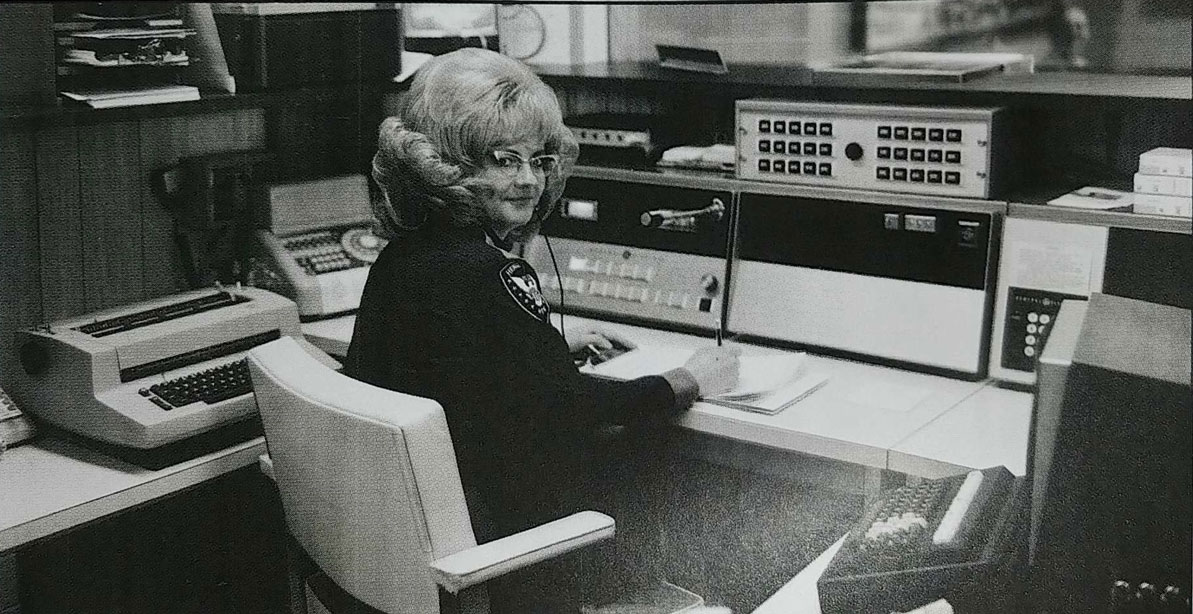
The continuing growth of the City of Henderson brought a tremendous increase in crime and it became increasingly II necessary to keep up with the technology of the times. The Law Enforcement Teletype System (LETS) was placed in use. All 50 states were on the LETS system at that time, with hundreds of cities in each state participating. The new LETS system was connected by computers which had been installed in all of the state capitals, making it possible to contact all 50 states within a matter of minutes. Previously, the department had relied on the telephone and telegraph systems for 'record checks' which could take many days to complete. With the LETS system, these record checks could now be accomplished within hours if out of state, and in just a few minutes within the state. The Federal Bureau of Investigation had recently joined the LETS system, thus making it possible for law enforcement agencies to contact the FBI directly.
On Tuesday, October 21, 1967, a story in the Henderson Home News called attention to the Police Reserve Officers receiving a 100 percent raise. The reserves would now he making a 'whopping' $.50 per hour!
One of the biggest events to occur at the end of 1967 was a 'pot' bust by the Henderson Police. Through a joint effort with the Clark County Sheriff's office and the Henderson Police Department, 21/2 kilos of marijuana were seized, with a street value of $125 after it had been refined.
1960's
1970's
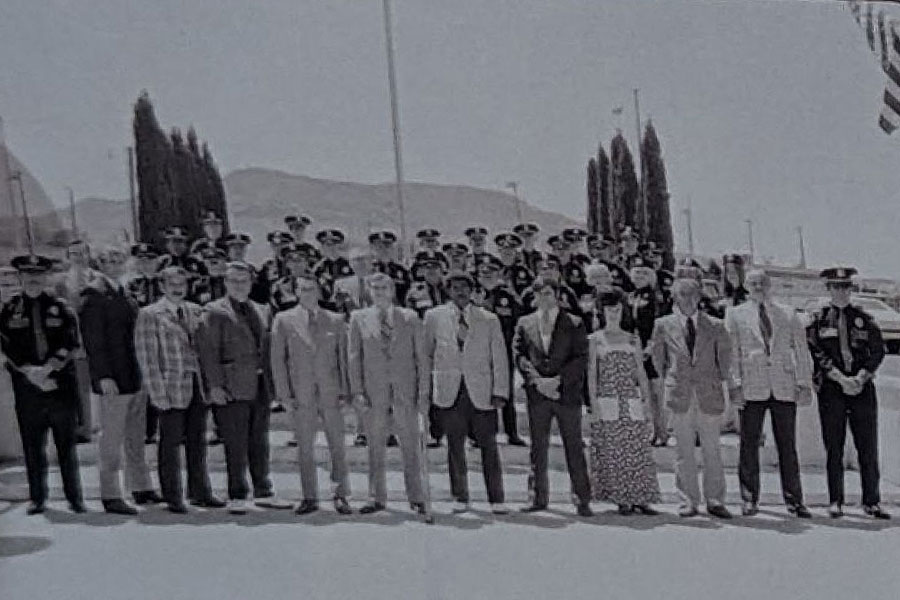
In the 1970’s, a Henderson policeman’s starting salary was $659 and could increase to $779, The City’s population was 22,000 but on weekends visitors could push the number to as high as 25,000.
The jail could house sixteen in the normal men’s cell block, four men in the trustees’ section, and four women in a trustees’ section. There were times on weekends when the jail was filled with as many as 24 30 inmates.
In 1970 Henderson became one of the few non-federal law enforcement agencies in the United States (and the only one in Nevada) to require college education as a prerequisite to being hired on the City’s police force.
1970's
In the 1970's, a Henderson policeman's starting salary was $659 and could increase to $779, The City's population was 22,000 but on weekends visitors could push the number to as high as 25,000.
The jail could house sixteen in the normal men's cell block, four men in the trustees' section, and four women in a trustees' section. There were times on weekends when the jail was filled with as many as 24 30 inmates.
In 1970 Henderson became one of the few non-federal law enforcement agencies in the United States (and the only one in Nevada) to require college education as a prerequisite to being hired on the City's police force.
In 1977, with a population of around 22,056, the department had 27 patrolmen, six sergeants, three lieutenants and two policewomen. In 1979, with an even larger population there were 25 patrolmen, five sergeants and five lieutenants, and crime had increased one-third since 1977.
Henderson police were the first in the county to have 'scrambler' radio units installed in their patrol cars. The equipment, costing about $7,500, was 90% federally funded.
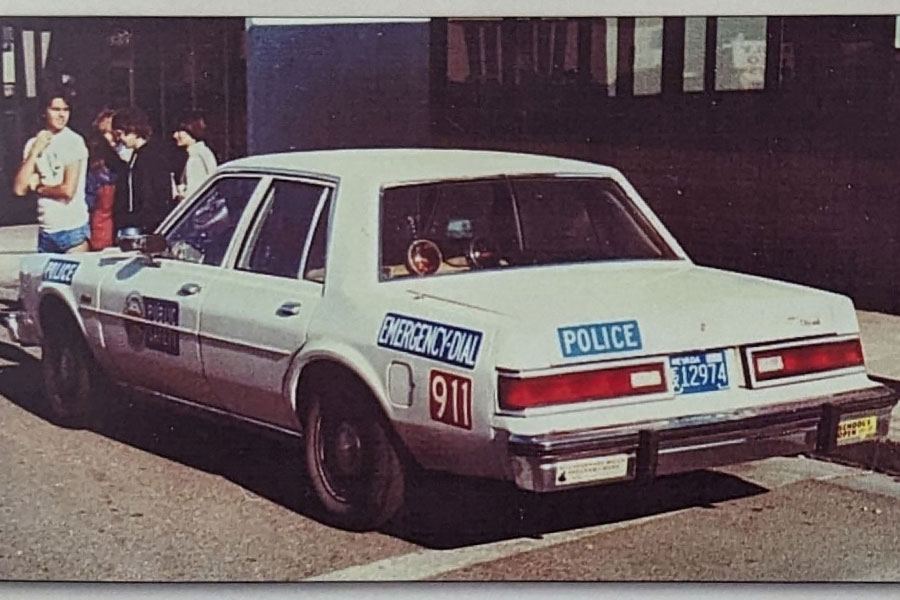
In December 1977, the Council announced that the Police Department would receive five new patrol cars — Dodge Aspens. The administration recommended the Aspen because of better gas mileage. It was estimated the Aspen would get 11 miles to the gallon whereas the existing fleet only got 7. The cars were small for most patrol officers, but were the first cars to come with AM Radios.
In January 1980, four new officers joined HPD bringing the officer complement to approximately 29.
July 1982, City Manager, Bob Anselmo, named Lieutenant Tommy W. Thompson, as the Deputy Director of Public Safety in charge of Support Services.
In the last month of 1984, the six year old Public Safety Department died silently as the Henderson City Council approved measures that returned Police and Fire Departments to the city administrative structure and police and fire were separated into two departments. Division Directors James Goff and Dale Starr were given new titles as Department heads: Goff was named Police Chief and Starr was named Fire Chief.
1980's
In January 1980, four new officers joined HPD bringing the officer complement to approximately 29.
July 1982, City Manager, Bob Anselmo, named Lieutenant Tommy W. Thompson, as the Deputy Director of Public Safety in charge of Support Services.
In the last month of 1984, the six year old Public Safety Department died silently as the Henderson City Council approved measures that returned Police and Fire Departments to the city administrative structure and police and fire were separated into two departments. Division Directors James Goff and Dale Starr were given new titles as Department heads: Goff was named Police Chief and Starr was named Fire Chief.
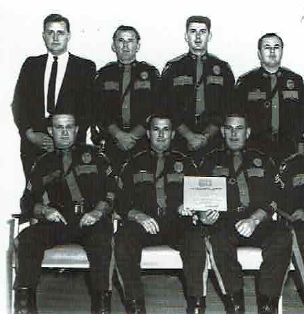
On December 2, 1985, D. E. "Kip" Botkin attended the 145th session of the F.B.I. National Academy, which consisted of an 11-week training course. Nearly 20,000 law enforcement officers had graduated from the academy since it began in 1935. Botkin, who had been with the Henderson Police Department since 1968, received his graduation certificate from Federal Bureau of Investigation Director William H. Webster in ceremonies that concluded the training session.
In September of 1986, seven new officers completed the Las Vegas Metropolitan Police Academy. These seven brought the total staff complement of patrol officers up to 35.
Officer William Adomeit was presented the Medal of Valor in June 9, 1988 for his work during the disaster at Pacific Engineering & Production Co. (PEPCON). Lt. Gov. Bob Miller presented the medal on behalf of the Clark County Peace Officers Association.
In1988, Henderson was the fastest growing city in Nevada and crime increased by 12 % in 1987. The population was estimated at more than 56,000 with predictions of 100,000 people by 1995. While the Henderson population boomed there were only 55 sworn police officers. Henderson then had less than one cop for every 1,000 residents; the average for all western cities was 2.5 officers per 1,000 citizens.
A voter approved tax increase for public safety put the first three of eight new officers who had entered the academy on the streets in March of 1989.
1980's
1990's

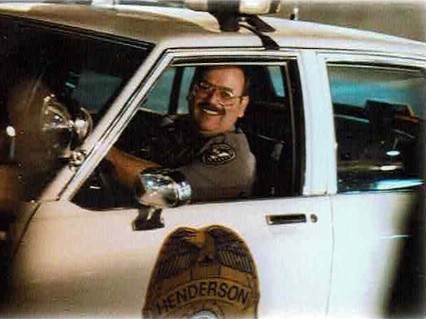
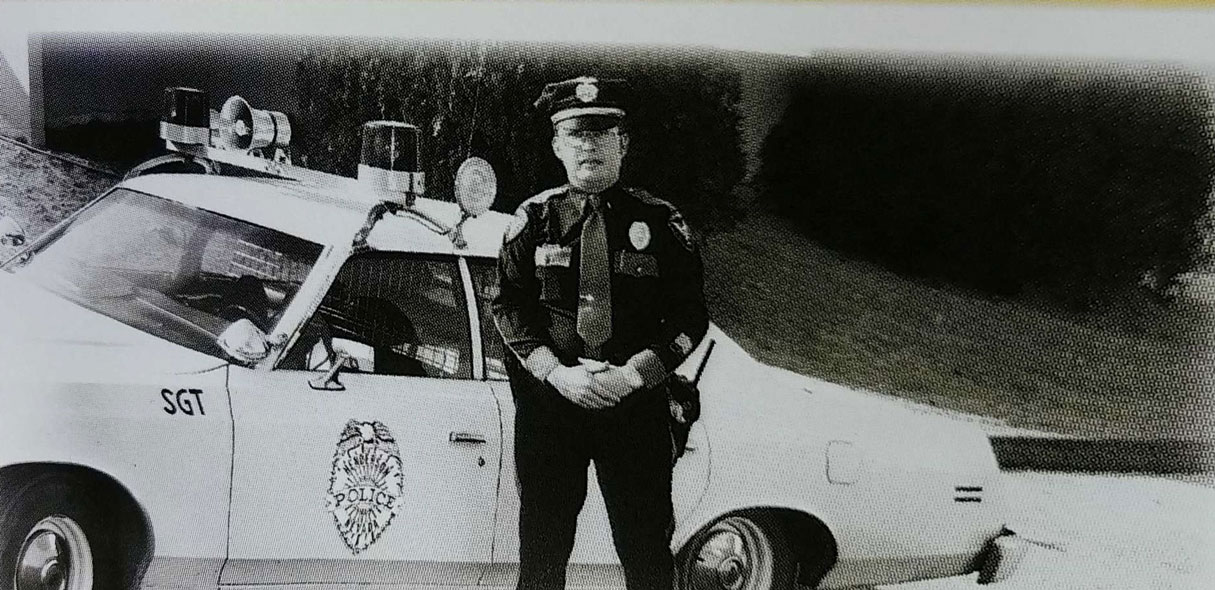
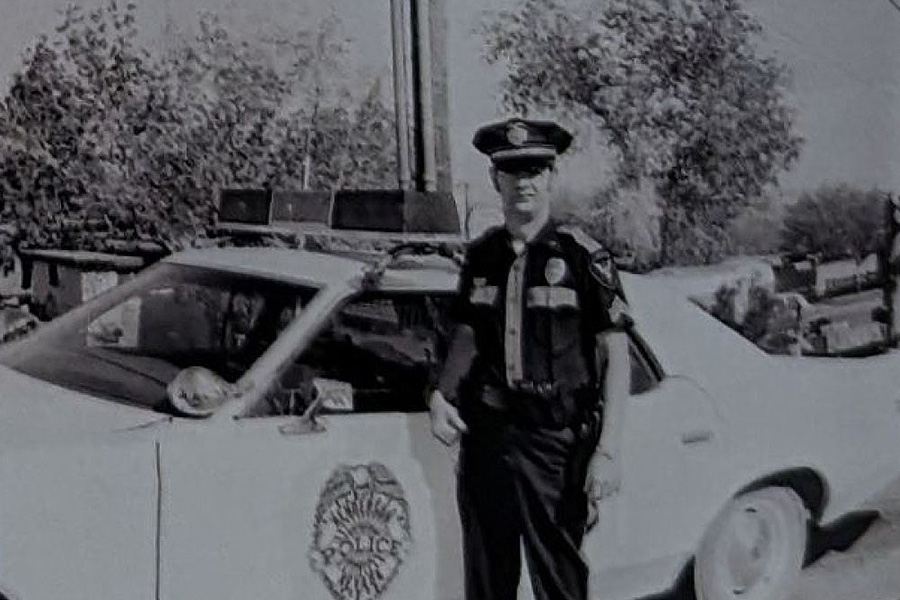
In March 1990, the Police Department patrol vehicles were styled with a new look. Rather than a gold-colored shield on the door, the ten new cars had a blue line across each side with a blue shield surrounding a copy of the city seal.
1991 brought more changes to the Henderson Police Department when the department changed to four, 10-hour four days a week. Along with that change came ten new police officers who had graduated from the Las Vegas Metropolitan Police Academy.
On May 7, 1991, almost three years to the day of the Pepcon explosion, Henderson residents woke up to a strong smell of chlorine from a chemical spill at Pioneer Chlor Alkali, which caused thousands of persons to be evacuated frill at least six separate neighborhoods. More than 100 persons were treated for respiratory problems as thick clouds of the chemical drifted over much of the city. All routes into the city were closed for nearly five hours and classes were canceled at all Henderson schools.
1990's
In March 1990, the Police Department patrol vehicles were styled with a new look. Rather than a gold-colored shield on the door, the ten new cars had a blue line across each side with a blue shield surrounding a copy of the city seal.
1991 brought more changes to the Henderson Police Department when the department changed to four, 10-hour four days a week. Along with that change came ten new police officers who had graduated from the Las Vegas Metropolitan Police Academy.
On May 7, 1991, almost three years to the day of the Pepcon explosion, Henderson residents woke up to a strong smell of chlorine from a chemical spill at Pioneer Chlor Alkali, which caused thousands of persons to be evacuated frill at least six separate neighborhoods. More than 100 persons were treated for respiratory problems as thick clouds of the chemical drifted over much of the city. All routes into the city were closed for nearly five hours and classes were canceled at all Henderson schools.
In just five years the number of officers in the Henderson Police Department had nearly doubled. from 41 in 1986 to 72 in 1991. including detectives and others assigned to special duty. The change to a four-day work week helped uniformed patrol officers increase their force during the hours when more help was needed.
In 1993. the new Emergency Services Building on Lead Street was opened. The new building was approximately 99,000 square feet, nearly four times the size of the 28,000 square feet of the current building. The old school and civic center buildings on the corner of Lead Street and Atlantic Avenue were bulldozed to provide parking spaces for the new buildings. The first portion of the Emergency Services Facility to be constructed was a secured, underground parking garage for official police vehicles: an evidence vault was also provided below ground level. The second floor housed training rooms, to include a classroom which could be used by fire personnel. The third floor housed an emergency operations command center and a new communications center.
Plans were developed for a new jail. The design forecasted the opening to take place in February 199-1. The existing jail had served the city since the 1950's.
The City of Henderson celebrated the grand opening of its new community policing center located in a one-room suite at the Silver Springs Recreation Center, 1951 Silver Springs Parkway. The center was established as a substation for police officers on patrol and community members who needed to report a crime or simply talk to a police officer. Two centers, one at the Black Mountain Recreation Center on Greenway Road and the other at the Henderson Water Treatment Plant at Athens Avenue and Pabco Road were under construction.
Faced with a continual increase in emergency calls that accompanied the population boom, Henderson's police and fire officials were hiring more personnel, updating their technology, and offering more personnel training in the hopes of combating that trend. An estimated 118,000 people lived in Henderson according to City records. The city's population had grown by an average 13.7% since 1990, and City officials expected it to reach 166,900 in 2000 and 262,900 by 2010. Calls for police assistance had increased by 66% from 1991 to 1994, while the city's population grew by 62,000.
The Police Department also revamped shift schedules to cover peak service hours; developed a more comprehensive training program for new supervisors; evaluated police back-up on non-violent and low-risk calls; expanded the desk officer hours to allow citizens more time to file reports and complaints; divided the City's four patrol areas into seven which gave officers a smaller area to patrol; and assigned officers to specific patrol areas. The Department set up community policing stations throughout the city. This program provided substations and more of a 'community presence' for patrol officers, who would no longer have to leave their beat to file reports. Revolvers were exchanged for semi-automatic pistols.
In 1995 the Department had expanded the narcotics unit to include a drug sniffing dog. In December the City opened a new animal shelter. As 1995 drew to a close, serious efforts were being directed to community policing with crime prevention.
1997 marked the beginning of the Special Response Team (later renamed SWAT) and hostage negotiators.
The last few years of the decade benefitted the Department in two ways: n. e City management made a concerted effort to hire more officers, and advances in technology made the police officer's job a little more efficient. The Department's computer -aided dispatch, as well as the reverse 9-1-1 (community notification) systems had been installed within the two previous years; and 1999 had been an especially productive milestone for the Department. The opening of the police substation in Green Valley Ranch had provided needed relief for the current station which had been busting at the seams since 1997.
In the early 90's. officers partnered with Kmart for a Christmas-time shopping program with underprivileged child-Later that decade, the Shop with a Cop program partnered with Target. Henderson police officers give their nine all' many times their own money, to help these children have a Christmas to remember. This program has continued ever-4 year since.
On Thursday April 27, 2000, Michael Mayberry, who had been Acting Police Chief for the previous eight months, was named as the Police Department’s new police chief.
The Citizen’s Academy program was established to allow citizens to learn about law enforcement and the department in a very “hands on” way.
The Henderson Police Department started participating in the nationwide Every Fifteen Minutes (E15M) program in May 2001 with a program at Foothill High School. Since the first event, more than 40,000 students have taken part in the Henderson program. In 2015, Police Chief Patrick Moers said, “The E 15M program lets the students participate in an experience that shows them what can happen when someone gets behind the wheel of a car after drinking. We want to work with the students and help them see the potential harm that poor choices can have on someone’s life.”
2000's
On Thursday April 27, 2000, Michael Mayberry, who had been Acting Police Chief for the previous eight months, was named as the Police Department's new police chief.
The Citizen's Academy program was established to allow citizens to learn about law enforcement and the department in a very "hands on" way.
The Henderson Police Department started participating in the nationwide Every Fifteen Minutes (E15M) program in May 2001 with a program at Foothill High School. Since the first event, more than 40,000 students have taken part in the Henderson program. In 2015, Police Chief Patrick Moers said, "The E 15M program lets the students participate in an experience that shows them what can happen when someone gets behind the wheel of a car after drinking. We want to work with the students and help them see the potential harm that poor choices can have on someone's life."
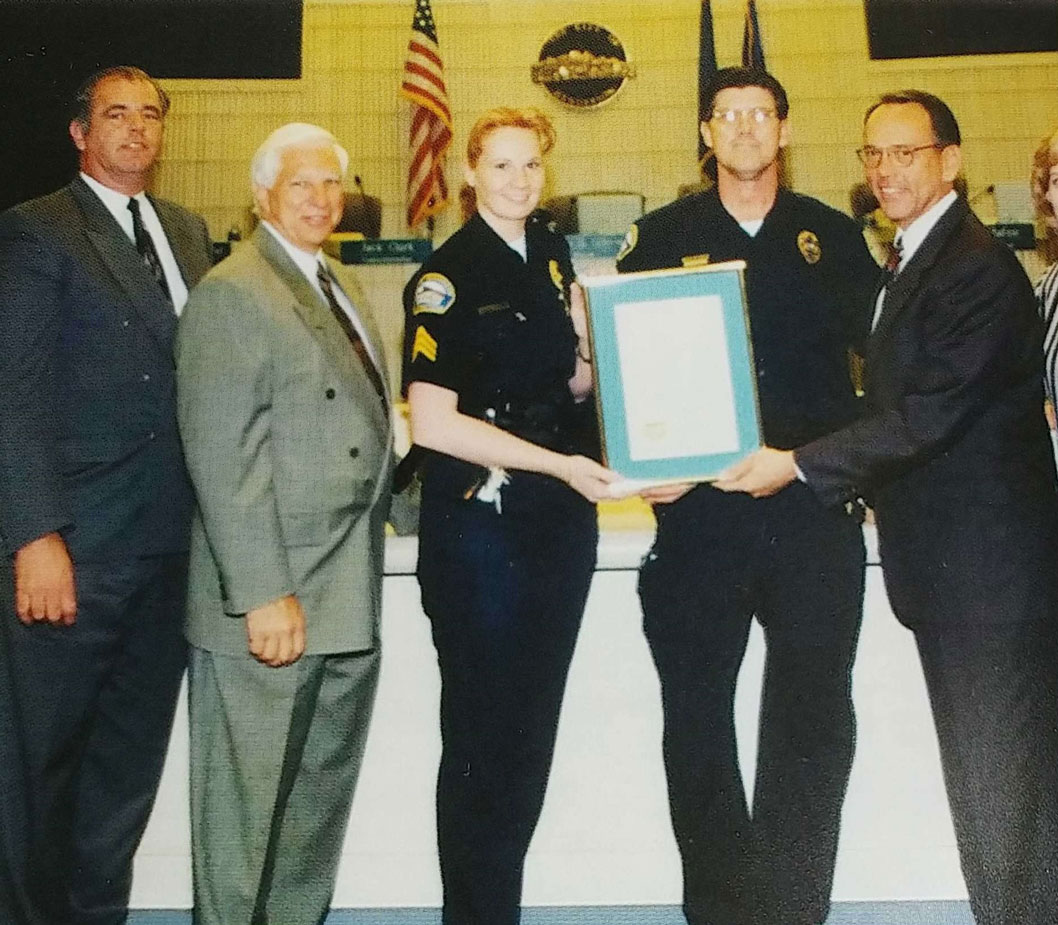
In January of 2001, the Henderson Police Department promoted Jutta Chambers as the first female captain in the history of the department.
In 2002, the Henderson Police Department earned CALEA (Commission on Accreditation for Law Enforcement Agencies) accreditation and became one of 500 agencies worldwide carrying the distinction of accreditation.
The Victim Advocate program was also implemented in the early 2000's, partnering with SafeHouse, to give victims a voice and help where needed.
In 2005, a tax initiative was passed that would increase the number of police officers hired by the department. This would continue until the recession of 2009.
In September of 2005 nine Henderson police officers volunteered to go to Louisiana for two weeks to assist in relief efforts following Hurricane Katrina.
In 2006, the Henderson City Council approved nearly $50,000.00 to renovate a building for forensics. The Henderson Police Department expanded its forensics capabilities by adding new labs capable of handling in-house blood alcohol and narcotics testing. This building also housed the fingerprint examiners.
The Henderson Police Department added 24 officers to its ranks on January 17, 2007 and planned to add twice that many each year for the next several years to keep up with crime in the growing city. In June of 2007, the City Council approved the new fiscal year's budget which would allow 20 police officers to be hired for the soon-to-be built North patrol substation. Unfortunately, the economy crashed shortly afterward and a freeze was placed on new hiring. Due to the crash in the economy, the City of Henderson directed its various Departments to trim 10% of their operating budgets in order to make up for a projected $28.2 million revenue shortfall.
The Henderson Police Department was re-accredited for the second time by the Commission for Accreditation of Law Enforcement Agencies in 2008.
In September 2008, the Henderson Police Department prepared to add a horse patrol to complement its crime fighting arsenal. The horses were housed in stables tentatively scheduled to be completed in late November or early December on City-owned land between the Animal Shelter and Bird Viewing Preserve.
In 2008, the Records Bureau implemented an electronic document management program and transferred all hard copy report attachments, dated 2000 to 2008, to digital images.
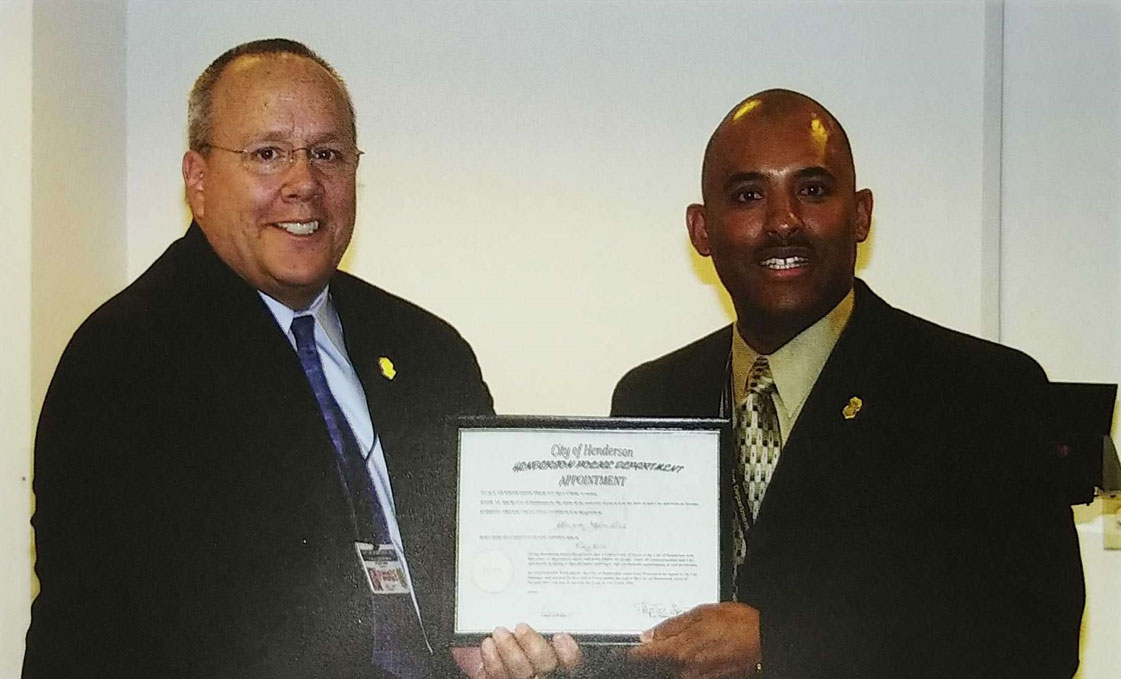
In December of 2008, Captain Jutta Chambers became the Department's first female Police Chief after Richard Perkins retired.
In 2009. a new 9-1-1 and logging recorder system was implemented which automatically routed calls to call takers. This new system reduced the call busy statistics drastically. On November 16, 2009, over 1,000 police calls for service were dispatched in a single day, a historic first for the City.
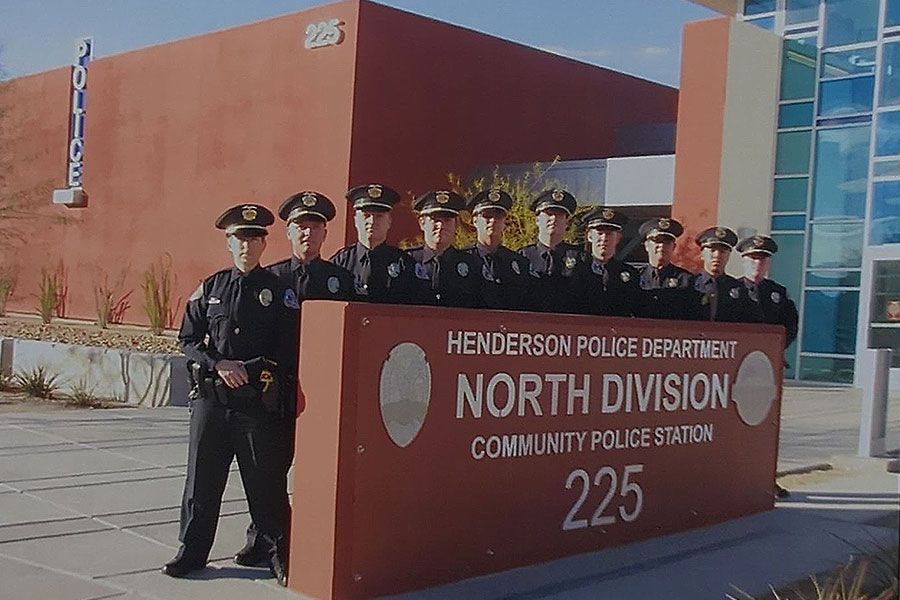
In March of 2009, the North Community Police Station opened. The building was the first City building to earn a rating from LEED (Leadership in Energy and Environmental Design). In fact, the building was awarded a Gold rating. the 2nd highest rating possible.
2000's
2010's

In 2010 the Henderson Police Department reorganized and added the new Special Services Division which houses SWAT, K9, narcotics, repeat offenders, intelligence, most task force officers, and homeland security in one division for better operational efficiency.
The City of Henderson adopted a mandatory spay/neuter ordinance to continue the effort to reduce the number of unwanted animals. This complements the city’s partnership with Heaven Can Wait who perform low-cost and no-cost spay and neutering. Animal Control conducted 35 Bite Prevention and Responsible Pet Ownership Educational talks reaching 130 adults and 1,057 children in their continuing efforts to reduce animal suffering.
2010's
In 2010 the Henderson Police Department reorganized and added the new Special Services Division which houses SWAT, K9, narcotics, repeat offenders, intelligence, most task force officers, and homeland security in one division for better operational efficiency.
The City of Henderson adopted a mandatory spay/neuter ordinance to continue the effort to reduce the number of unwanted animals. This complements the city's partnership with Heaven Can Wait who perform low-cost and no-cost spay and neutering. Animal Control conducted 35 Bite Prevention and Responsible Pet Ownership Educational talks reaching 130 adults and 1,057 children in their continuing efforts to reduce animal suffering.
Also in 2010, HPD conducted the groundbreaking of the Eldorado Valley Regional Public Safety Training Facility (EVRPSTF). Partnering with the City of Boulder City, this training facility was built on BLM land and would become a regional law enforcement training center. This regional training center benefitted local, state, and federal partners.
In 2010. Captain Mike Johnston and the Henderson Police Department piloted the YES, Incorporated program. This program provides high school students mentorship and professional development. Captain Johnston regularly meets with students to discuss current trends in law enforcement, testing requirements, academy life, job interview skills and crime scene investigations. Additionally, an annual job shadow where students are provided demonstrations/sit-a-longs with our Crime Scene Analysts, Communications, Municipal Court, SWAT and K-9 is organized.
On February 9th, 2011, the grand opening of the expansion to the Henderson Detention Center was held. A renovation of the facility that was originally constructed in 1994 was also accomplished leading to a total facility capacity of 540. This expansion effectively doubled the bed space and allowed for a more open and expanded booking area to handle an increased inmate population due to housing contract inmates from local and federal agencies. This led to an increased sworn staff of 72 officers, 6 sergeants, 4 lieutenants and I captain, and an increased non-sworn staff of 11 detention center technicians, 8 central control room operators, 2 detention center support supervisors, a PAS II and PAS III. Police Department volunteers staff the public lobby 7 days a week and also assist in filing and quality control of the files.
Currently, the Henderson Detention Center holds inmates from the Clark County Detention Center, United States Marshals Service, Immigration and Customs Enforcement, Boulder City Police Department, the Paiute Tribal Police, and is the booking facility for all federal arrestees. The revenue from holding these inmates goes back into the city's general fund and helps to offset the costs associated with the detention center. The traffic unit implemented a DUI squad, and deployed electronic ticket writers to patrol.
The overall crime rate for the city declined considerably from 2009 to 2010. Motor vehicle accidents, both fatal and injury, dropped for the third year in a row.
In 2010, Nevada was the filth most diverse state, according to USA TODAY calculations. The Silver State ranked 27th in 1960 and stayed near the middle until 1990. By 2060 Nevada will rank third in racial and ethnic diversity. The Police Department continues its cultural diversity training designed to educate officers on how to recognize stereotypes, prejudices, discrimination and oppression. increased efforts have been made to build relationships with minority groups. One goal is to increase applicant diversity in future recruitments.
The Community Relations Unit developed the D.R.E.A.M.S. (Decisions Responsibilities Education Achievement Motivation and Self-Esteem) program, which replaced D.A.R.E. (Drug Abuse Resistance Education). D.R.E.A.M.S. was piloted at CT Sewell Elementary. The full program would be presented to 25 elementary schools for the 2011-'012 school year. CRU received the SOAR award for their work on the D.R.E.A.M.S. program.
ln 2011, the Henderson Police Department purchased 150 in-car video cameras which were installed in the patrol fleet. In addition, Automated License Plate Readers (ALPR) were installed in 3 patrol vehicles each of the 3 stations In June the ALPR system netted its first arrest.
HPD partnered with AlertID to help residents protect their neighborhoods by supplying them with up-to-date information through online tools. HPD was the first law enforcement agency in Sou- ,Arn Nevada to have the software available to its residents.
As part of a health and wellness initiative, a cross-fit program was implemented within the Police Department. The training sessions took place at three different times during the day, and were available to all PD and City employees and their families.
The IACP (International Association of Chiefs of Police) selected the Henderson Police Department to be a part of the Benchmark City Coalition, a group of 26 selected law enforcement agencies from within the IACP.
Forbes ranked Henderson the second safest city in America in December 2011. The ranking is based on the number of violent crimes (murder, forcible rape, robbery and aggravated assault) per 100,000 residents in 2010 as reported by the FBI.
In October of 2011, the Records Bureau completed a successful implementation of Coplogic, a web-based system for r citizens to submit crime reports.
On July 17, 2012, Patrick Moers was named police chief following the March retirement of Jutta Chambers.
In 2012 Henderson was ranked as the 6th safest city with a population over 200,000. Ranking is based on the FBI's Uniform Crime Report statistics and is determined by calculating the violent crime rate per 100,000 citizens.
The HPD created a use of force expert in a management and oversight position in 2012. This officer reviews all use of force incidents, policy, training, and stays current on the most recent court decisions.
In 2013, the Records Bureau began submitting incident crime report data to N-DEx which is an FBI database used by most of the United States.
Also in 2013, Henderson deployed its first HIDTA task force. The SCOPE 11 Project was completed, providing a current, enhanced functional system to meet the information sharing demands that are required of a pliable. efficient, This and effective crime fighting tool.
Carfax, a company that disseminates closed accident reports to the public online free of charge, was implemented in 2013.
In 2013 a community outreach program, Talk Shop with Cops, began in local neighborhoods in order for the community to have access to the area commander to ask specific questions about their neighborhood.
In 2013 Law Street Media ranked Henderson 6th in the top 10 safest cities with a population more than 200,000. This was due to low crime rates and low officer to population distribution.
In 2014, HPD implemented the 440 Warrant Pickup Program. The 440 WPP has increased the efficiency of transporting wanted subjects between detention facilities, allowing HPD patrol officers to remain in their patrol areas; and brings all wanted subjects into custody instead of 50% of them being released.
In March of 2014, the Henderson Police Department received a CALEA Gold Standard Accreditation. The Henderson Police Department has been accredited through the Commission on Accreditation for Law Enforcement Agencies since 2002. HPD is tile first agency in Nevada to receive such a distinction.
In August, 2014, the Communications Bureau purchased and deployed a new Intrado Viper E9-1-1 system. The system design was revolutionary because two separate servers were established, one at the main station, and one at the backup facility in the West substation. At the same time the NICE logging recorder was also upgraded. Both Viper and NICE are operating in a virtualized environment which will allow for greater expandability and faster recovery in the event of a failure.
In 2014. the PowerDMS software was purchased and implemented to track policies, facilitate employee familiarity with the policies, and allow for the organization of CALEA accreditation documents and proofs.
A new career development policy was implemented in 2014. This policy will encourage job rotation amongst the department's various specialized units, will provide greater job satisfaction for officers wishing to stretch their competencies, and provide a more well-rounded department with greater cross-trained officers and balanced skill sets.
HPD contracted with the National Testing Network to provide testing for police and corrections officer positions. The savings realized with this contract are over $10,000 per recruitment. Applicants will have the flexibility to take the test at a number of locations in 14 states initially.
The US Department of Justice, through the Smart Policing Initiative, awarded the Henderson Police Department a $610,000.00 grant to develop and deploy an investigative lead generation tool to assist with identifying and prosecuting criminals who use e-trade to sell stolen property. This data mining tool, the Vegas E-Commerce Tracking and Reporting System (VECTRS), will assist with the identification of stolen goods posted on the web so HPD can return stolen property to its original owner within the City of Henderson. The HPD will collaborate with other local jurisdictions and federal government organizations in southern Nevada.
The HPD fitness program was consolidated and the training offered four times per day, Monday through Thursday. A location was established, new equipment purchased. and participation by both police department and city employees was increased. In 2014, the Henderson police officer demographic was 84.82% Caucasian, 4.02% African American, 0.22% Native American, 4.02% Asian American, and 6.92% Hispanic.
The Corrections Bureau implemented a specialized unit trained to handle inmate movement, disturbances, and uprisings in 2014. The Cell Extraction and Response Team (CERT), when deployed by properly trained personnel, can reduce officer and inmate injuries and reduce an agency's liability.
In 2014, commissary inmate financial system kiosks were deployed at the Corrections facility. These kiosks allow inmate currency to be deposited into an account under the arrestee's name. The funds in these accounts can be used by inmates to purchase a variety of services available within the detention facility.
HPD's Detention Center implemented an inmate orientation video in English, Spanish, and American Sign Language.
Animal Control officers, working with the HPD Training Bureau, conducted training for all HPD recruits. This training includes animal handling techniques and understanding basic animal behaviors.
In 2014 the City of Henderson was ranked 5i" in the Top 10 Safest Cities poll by two media organization due to the continued low violent crime rates.
In 2015 the Coffee with a Cop program was implemented. Much like Talk Shop with Cops, Coffee with a Cop offers the opportunity for members of the community to meet officers and command staff at local coffee shops.
In June of 2015, Henderson Police negotiated with Verizon Wireless to provide "Text to 9-1-1" capabilities to Henderson residents. Henderson partnered with the hearing impaired community in its implementation. This service significantly increases the hearing impaired citizen's ability to contact and communicate with 9-1-1 operators. Henderson was the first agency in the state of Nevada to deploy text-to-9-1-1.
The HPD Training Bureau added an educational career development officer. This officer is the liaison for all education institutions wishing to be involved with the HPD and is also responsible for building from the ground a career development plan for officers. Newly-adopted department standards now require a college degree for advancement beyond the patrol officer level.
In 2015 diversity programs targeting women, African Americans, Hispanics, and Asians were formalized.
The Henderson Police Department conducted its first recruitment orientation in the format of public meetings. Attendees were given information on outreach programs, the hiring process, and requirements. Over 500 interested community members and their families attended meetings in 2015.
A complete overhaul of the joinhpd.com webpage was completed. This webpage included helpful links and comprehensive information regarding the hiring process.
The diversity of the SWAT team was increased with the addition of the first female lieutenant and first female SWAT alternate.
In late 2015, Communications was awarded a CALEA Communications accreditation. This was the result of two years of development of policy and the gathering of proofs.
The Training Bureau developed "Run, Hide, Fight", an active assailant training. This class was delivered to civilian personnel throughout the city in an effort to give simple, easy to remember training that could save lives in the case on an active assailant. In 2016, the Southern Nevada Area Communications Council (SNACC), in collaboration with Motorola, deployed fully digital, P-25 radio system.
*Text and photo credits to: Peachtree Portraits and the 50th Anniversary Henderson Police Department book*
History Gallery